
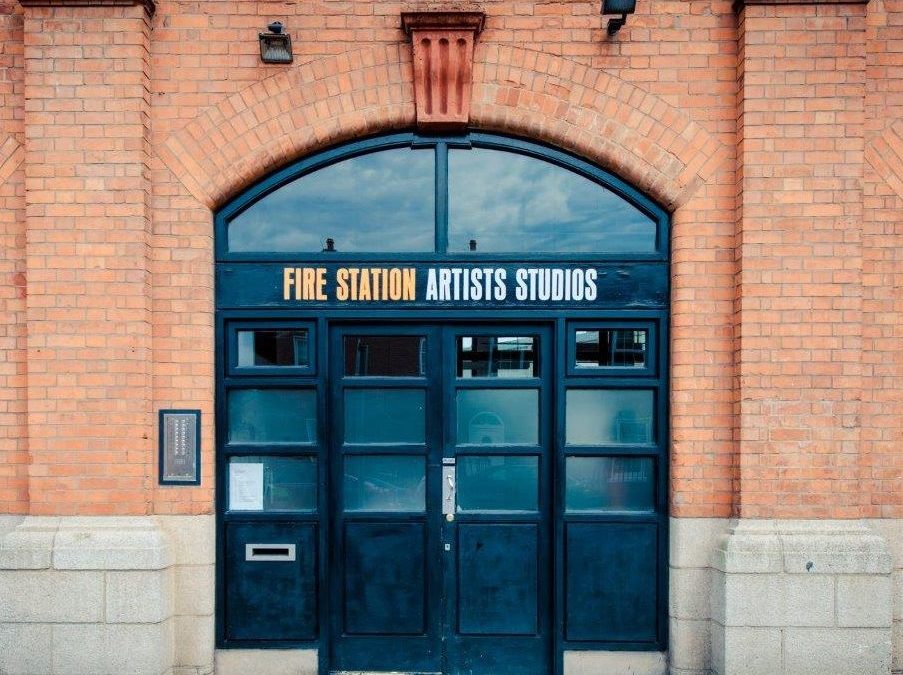
On my own behalf and on behalf of Unite, I couldn’t have been more pleased than to have been asked to say a few words at this event last night: the launch of ‘Personal Journeys in an Unequal City’, held in the Fire Station Artist Studios on Buckingham Street in Dublin’s North Inner City.
Here’s what I had to say:
When I first got to read ‘The Systematic Destruction of the Community Development, Anti-Poverty and Equality Movement’ by Patricia Kelleher and Cathleen O’Neill last Autumn it was a real wake-up call. This seminal work described how the 1980s and the 1990s saw the emergence of a vibrant state-funded community movement. and how this has been displaced since 2002 with what Cathleen and Patricia describe as ‘a shift from participatory democracy to neoliberalism’.
The book being launched tonight, ‘Personal Journeys in an Unequal City’, carries the reflections on this period – and what has happened since – of eleven people with such a breadth of experience in the community sector that a permanent record of the work done, the successes, the failures, the changes and the challenges is essential.
When I say essential I am not referring simply to recording these experiences for posterity and historical accuracy. While such an endeavour would be worthy in and of itself, the issues addressed in the book are of more importance than that.
The issues that need to be addressed in our working class communities can, I think, be broadly captured under the heading of ‘equality’.
In the book Peter McVerry talks about how it was reckoned in the 1970s that there were 1000 homeless people in Ireland, and how they were mostly middle aged men with drink problems. Today we have over 10,000 recorded homeless citizens and many more ‘hidden homeless’; they are disproportionately young and many are entire families with children.
In work poverty is now ‘a thing’. Under-employment has replaced un-employment and for many of our young, my own children too, the future is more uncertain than ever. More ‘precarious’. Will young people get secure work, with wages that they can live on, buy a house or pay rent on, rear a family on? We all know that in most working class communities these essentials have become rare things.
Equality has many facets. Some would point to a more permissible society as signs of positive social change. We have had referenda on divorce, marriage equality and the Eighth Amendment, and our government takes the international plaudits for these changes, the gushing recipient of garlands of congratulation. But whatever about your personal views on those issues where is our ECONOMIC EQUALITY? It seems to me the Government are saying to us ‘do what you want in your personal private lives, but demand economic equality and we’ll crush you. Know your place!’
As a Trade Unionist, the consideration of the empowerment of a community movement in the 1980s and 1990s poses a real challenge for me. As I read the book I learned a lot. For example, thanks to Anna Quigley I learned that there is actually such a thing as a ‘good SCAB’, this is BIG NEWS! – in this case its full title is a ‘Small Community Amenity Building’, as Anna records.
But I also learned that the very years that I as a Trade Unionist had written off as an unmitigated disaster – the ‘social partnership’ years of the 1980s and 1990s – were the very years many of the contributors refer to as the golden period for vital and necessary community development and empowerment.
How could this be?
To me those were the years when the Trade Union movement engaged in a voluntary period of disempowering itself and disadvantaging our class, when it withdrew from the fray of fighting employers on behalf of workers and instead became ‘the workers policemen’. Industrial peace was traded for moderate pay increases and tax cuts, cuts that would ultimately hollow out many of the public services in health, education and housing that the working class itself relies so heavily on.
Yet parallel to this men and women in this community, and others, people of the calibre of Tony Gregory, Mick Rafferty, Pauline Kane and Seanie Lambe were working in their communities to address drugs issues, crime and inequality, housing quality and social justice with every fibre of their being.
Seanie captures it perfectly as follows:
‘I stood for election for the Communist Party in 1979. However the Gregory campaign seemed far more attractive because they were trying to do practical things such as fighting for jobs and decent housing conditions, so I started to join up with their activities. It became my life, community work’.
(Seanie kept a bit of that communism going, I first met him in Havana Cuba in 2006, but joking aside the personal journeys and learning in this book are now essential.)
If the golden period for community empowerment started to end with the PD/FF Government of 2002, it drew to a shuddering half in 2008 and 2009. So too did Social Partnership, not because the Unions left it, but because the Government kicked them out of Government buildings to make way for the Troika.
Here now we had the neoliberal juggernaut in full flow. Economic sovereignty was gone, they decided that €65 billion of private speculators’ debt had to be nationalised – a debt we and future generations will carry to about 2054, swingeing job cuts from ‘An Bord Snip Nua’ (they even have a nice Irish name for screwing us over), tax rises for the majority, tax breaks for those who bust the country, cuts to public services, mass emigration. Less houses, less services, less police.
And into that vacuum of hopelessness and betrayal came the almost total abandonment of the communities and the unions who in different ways had worked with Government for decades, sacrificed on the altar of neoliberal inequality and greed.
Community empowerment has now been bureaucratised and handed over to the state. We now have the best in our communities working to provide services in those communities absent of any egalitarian ideological framework or class analysis. Help and aid is controlled and regulated, and poverty has gone from being a problem to being an industry to make money from, and off. Witness how the homelessness emergency is used to enrich the property and landlord class. Witness how direct provision for vulnerable asylum seekers is a multi-million Euro industry for private providers.
Anna Quigley puts it better than I could:
‘I am not really sure how to balance the short term need for emergency or remedial action with the long term aim of real social change’.
Peter McVerry, a man who inspires so many, speaks plainly of the societal problems we now face:
‘I am not optimistic about the future because I see no evidence that the government is prepared to implement the policies necessary to build a fair and more equitable society.’
Tessie McMahon recalls how in the 1970s
‘there was a huge need for adult literacy in the community’.
Behind the ideologically-driven spin about the ‘knowledge economy’, is it any different today?
But still I know this. I know while we have people like Tessie, Anna, Peter, Fergus McCabe, John Farrelly, Marie Metcalf, Pauline Kane, Seanie, Paddy Malone, Gerry Fay and Mick we have much to celebrate because we have knowledge, caring, learning and hope.
As they say in culchie land when seeking directions:
‘Well, if I was you I wouldn’t start from here’ – Yet here is where we are.
I am honoured and inspired to be reading and learning due to the work begun by Patricia and Cathleen published last October. Unite is at the heart of your community just down there in Abbey Street. What can we do to help? Ask us.
Do we need a permanent evolving ideological framework – a think tank if you will – to underpin our future approach to community work?
Unite Community has been developed specifically because, in the neoliberal era, workers’ lives are shaped as much by factors outside of work as inside.
More so.
Think about it? What sort of pay rise would any union have to negotiate for its members to pay the rents of the property and landlord class in this city, let alone to allow them get a mortgage?
Can Unite Community help?
While we consider these questions as we go forward I want to just pause now and celebrate the people in this book and in our communities who, sorry Father, ‘give a shit’, and continue to.
‘Personal Journeys in an Unequal City’ is the perfect title for a book that not only records brilliantly what went before, but that gives us lessons and signposts that are badly needed in the push for a fairer more equal Dublin, a fair and more equal Ireland.
ENDS